
Notes from the 2026 African Energy Investment Forum in Paris
I spent two days at the Invest in Africa Energy Forum in Paris, and this is a peek into the event, in case Africa is on your radar. I cover the event itself and the broader themes that came out of the conference programme and many great chats with attendees.
EVENTSCOMMUNICATIONS OPPORTUNITIESSTRATEGIC PLANNINGTACTICSAFRICA
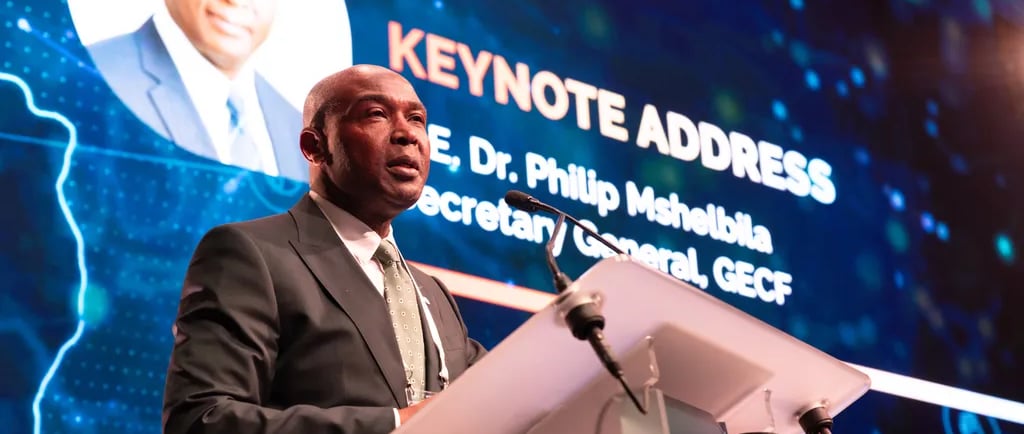
Invest in Africa Energy Forum, Paris: Key Takeaways for the Energy Community
I spent two days at the Invest in Africa Energy Forum in Paris, and this is a peek into the event, in case Africa is on your radar. I cover the event itself and the broader themes that came out of the conference programme and many great chats with attendees.
Why one would attend
This is an event that would be very useful for those already involved or considering getting into Africa's energy and resources sector, but Energy Capital and Power (EC&P), the event organising arm of the African Energy Chamber, have been actively growing their regional portfolio, focusing mainly on the developing and high potential areas of the world, so it is worth reviewing the offerings and seeing if something aligns well with your commercial priorities. EC&P positions itself as a pragmatic investment platform that helps energy capital and opportunities meet, and it has been growing rapidly. I attribute that to its down-to-business entrepreneurial spirit, which I strongly enjoy and relate to. What that looks like in practice at the event is active networking, commercial matchmaking, and honestly discussing the problems that stand in the way of business and, by extension, development. The way I see it, one of its key functions is to help the energy sector entrepreneurs do what they do best: build.
Caution - this is subjectively my opinion - and it is that here are far too many aid-centric narratives about Africa, and in my view, they have been dominating the landscape too long. Here, it is different. The tone is more about empowerment, not pity. It puts the emphasis on agency and makes it possible to envision a future where the African people build their own life, economy, and prosperity.
The Paris edition is a good one for connecting to African government representatives on this side of the world, and it is intimate enough that you have a chance to meet everyone there and make connections meaningfully, but has been increasingly building up to now also attract CEOs of key operators in the region. These are usually the executives with boots on the ground. Most are independents, but also some mid-size and bigger listed companies, and regional reps of the multinationals. Taken together, the attendees represent a mix of investors, operators, government representatives, and specialist consultants who really know Africa - all the different pieces of the puzzle one would need to build and deliver projects.
This edition was also notably attended by folks from Washington who represented the Development Finance Corporation, which was previously unable to support any projects that were linked to fossil fuels. This signals that the US looks to continue investing in Africa, just with a different set of rules around what it will back.
Key energy development themes and communications takeaways
I can't do justice trying to summarise two full days of deep discussions with a one-page summary, so I'll focus on the most important takeaways and the themes that are key to unblocking Africa's energy and industrial development. So that, as a TotalEnergies representative put it, Africa can move from the exhausting and beaten to death discussions of its "potential" to actions, projects, and real measurable growth. This is a topic close to heart for me too, since in my previous life when I ran research and publications for the International Gas Union, we did work on the region's gas development perspective, which was captured in the first edition of the IGU's Gas for Africa report. The main lessons that came out of that report back in 2023 remain true today, and all of them resurfaced at the conference.
1. Huge gas opportunity that remains crazily overlooked
More than 70% of all hydrocarbon discoveries in the last 15 years were gas, and yet Africa's gas production has gone down recently. Lacking infrastructure, policy, and habitual priority given to crude in the region are the big blocking factors. LNG plants and pipelines that do exist in Africa sit under-utilised, because there is not enough feed to bring to them. Globally, while LNG project glut is a favourite topic, what gets discussed much less is the great volume of new feedgas supply still needed to supply the plants. So realising Africa's gas opportunity is a relatively low-hanging fruit for global energy security, but it requires primarily Africa's own leadership and governments' action to make it real.
2. No domestic markets, no development
Without building domestic markets and adding value to the raw resources at home, any talk of economic development is going to remain just talk, regardless of how much pretty aid and development wrapping paper and bows you put on it. Whether it is refining, manufacturing its own fertiliser, minerals processing, gas-to-power, or petrochemicals, the value is leaving the continent as raw commodity and then in many cases gets re-imported from abroad at a higher price. This also means losing out on high-skilled and well-paying jobs, tax revenues, and industrial capacity needed to develop economic independence.
3. Above-ground risk still the biggest blocking factor
Good geology and resources are not sufficient to bring in substantial investment to turn them into producing projects. The trifecta of regulation, governance, and security (in that order) stands in the way. You can't fix it overnight, but progress has been slow. One public company CEO who is active on the continent said it plainly, "you can't have corruption and expect big international company capital to flow," and everyone knows that he is right, but rarely does someone say it so bluntly.
4 . Old narratives that prevent Africa from winning more investment
This point is more directly linked to communications. The use of the same old narratives prevents African resource development from attracting more investors. Modern capital is geographically mobile and jurisdiction-agnostic. Investors are always comparing their options across regions, looking at how all their costs, including risk, stack up to the returns to choose where to go. It is a highly competitive market between jurisdictions, where unfortunately Africa (generally) has not been winning. The governments that understand this and adapt their narratives to what the investors are looking for, as an effective marketer would, which also means addressing the aspects of costs and risk proactively and transparently, will be the ones to sign the deals.
5 . Lessons on modern public corporate communications that apply everywhere
This final point is very important and the most pertinent practically to the energy businesses and how they show up in public today. I really enjoy the less scripted nature of the panel discussions at the Invest in Africa Energy Forum. This can scare us, comms people, sometimes, but the world has really changed, and audiences no longer respond to highly sterilised and over-scripted PR messages. The information space and how we interact with it today has experienced such an exponential change in the last five years, that doing public communications the way we did them even back in 2020 will completely miss the mark.
Sticking with old, overly-controlled playbooks is a bit like using the Gutenberg press in the age of the internet. This isn't to say you should go completely freestyle, which is still strongly inadvisable, and a clear strategy, key messages, and planning are still essential for impact, but the way they are to be effectively applied today is changing rapidly. Energy communications professionals have to increase risk tolerance and widen the permissible margin of deviation for their executives. They should stay clear on the critical elements of the repeatable story, but stop trying to control it all, and let the personalities come through more.
P.S. At the start of the year, we did a post on the key considerations for choosing the right events with ever-limited communications resources, and included a 2026 calendar of the main global energy events - here.
Building Smarter Energy Communications
© 2026. All rights reserved.
Send us a message, or
Book a free discovery call, or send us an email.
contact@statem.net