
The Context and Narratives: Week in Focus Mar 23 - 29 | Gulf Energy Crisis and More
Catch up on the Gulf energy crisis timeline and everything that is shaping the context around the global energy narrative with this carefully curated review of key energy news #ICYMI. We create this synthesis from hundreds of read articles each week, so you can save time and get up to speed only on what matters - fast.
CONTEXT
3/29/202616 min read
The Global Energy News and Context in Focus
#ICYMI
Your briefing on everything that matters for the energy business context at the start of the week. We went through dozens of energy news stories and reviewed what matters, so you can be across it, fast.
Week of March 23 – March 29, 2026
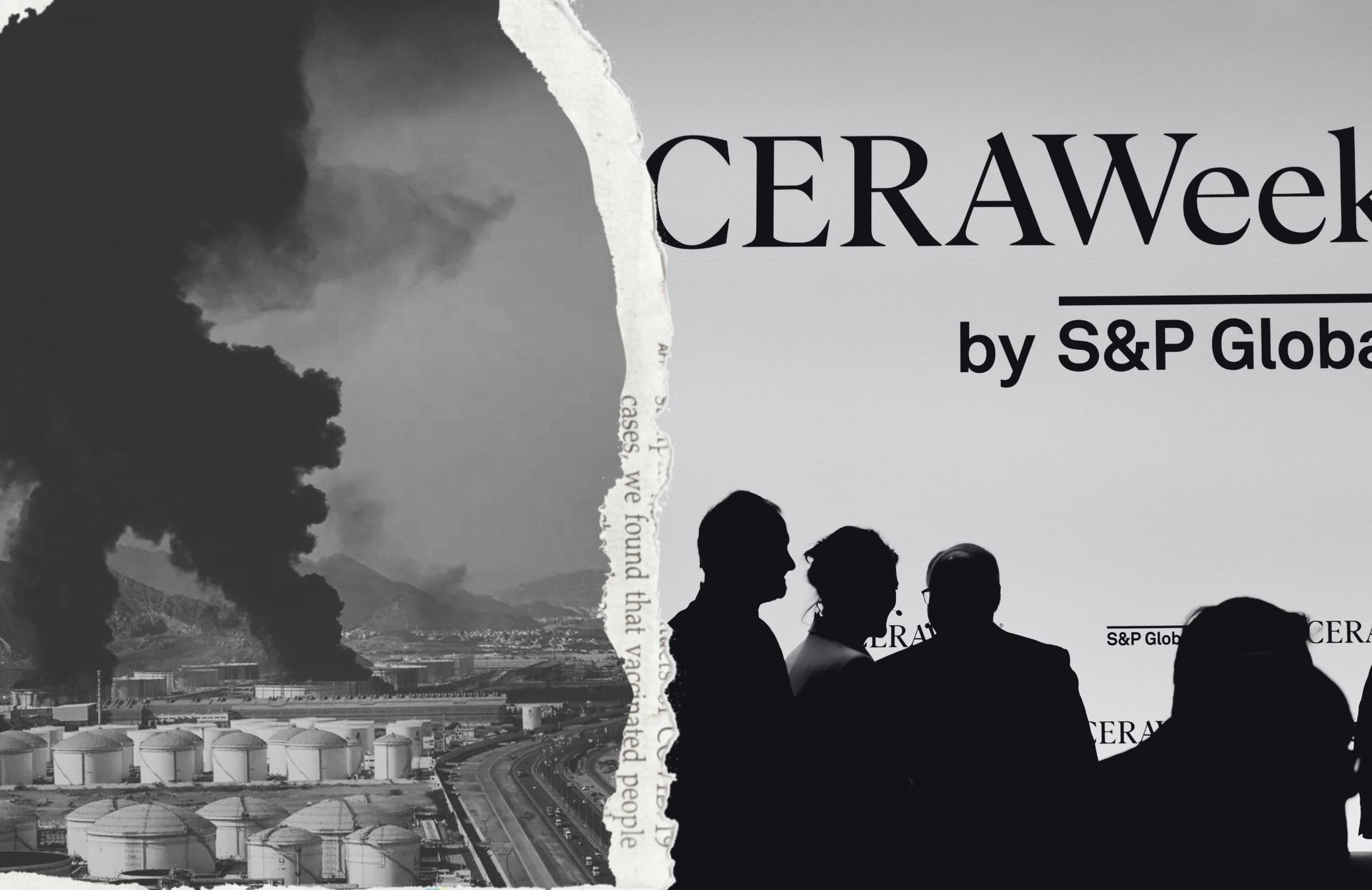
Last week was about who said what at what I call the Oscars of Energy (and S&P Global calls the Energy Super Bowl) - the CERAWeek - with the backdrop of havoc caused by the ongoing Iran war. The unpredictability of the global context has permeated the halls and the stages, and some attendees, like Amin Nasser, the CEO of Saudi Aramco stayed behind to deal with the situation on the ground at home.
The war crossed its one month mark, with no end currently in sight. It unleashed an energy crisis worse than the 1973, 1979, and 2022 - combined - as assessed by the IEA. At least 40 energy assets across nine Middle East countries have been damaged.
The Strait of Hormuz is effectively closed, with Iran deciding rights of passage. Iran is the sole Gulf exporter still moving crude, earning $139 million a day, charging transit fees of up to $2 million per commercial vessel and drafting legislation for a permanent tolling regime. Macquarie warns oil could hit $200 if the closure extends through Q2, while Energy Aspects cautioned that the longer output stays low, the harder recovery becomes due to slower ramp-ups, higher investment needs, and lasting field damage.
Natural gas prices in Asia more than doubled and in Europe are on the way to doubling, with storage at one of the lowest points in recent years; Brent closed at $114.57/bbl on Friday, while the price of fuel is shooting up and hurting every part of the transport economy, from Boeings to Thai fishing boats and African Tuk-Tuks. The crisis is spreading fast.
The UN projects 45 million more people facing acute food insecurity by June. Nations are implementing protection measures to secure domestic supply of key inputs, like fertiliser, which makes the bad situation more dire.
Roughly a third of the world's helium supply is out in Qatar, hitting strategic sectors from space to chips and medicine; sulphur supply is also hit. Asian nations are deploying COVID-era emergency measures from fuel rationing to school closures; Egypt's gas import bill tripled, while a cyclone in Australia removed another 8.4% of global LNG trade at the worst possible moment - talk about when it rains, it pours. At the same time, the Russia-Ukraine war continues to rage on, and recent attacks have impacted what some assess as close to 40% of Russia's oil export capacity.
Read our review to understand the underlying currents of this week's biggest energy context and how to position your organisation effectively within these rapidly evolving market dynamics. If you want to delve deeper into any of these topics or order a rapid research brief, we would be delighted to connect on a brief call. You can book directly through the button at the top of this page.
Part 1: The Gulf Crisis
Iran War & Hormuz Crisis Timeline
Monday, March 23
Iran struck UAE targets with drones and missiles as Trump's 48-hour Hormuz ultimatum neared expiry; Saudi Aramco cut April crude supply to Asia for a second month (exports falling to 4.355 million bpd from 7.108 million in February), the UAE restarted its largest gas processing facility but kept Das Island LNG idling, the US ruled out further SPR releases, and satellite data showed 175,400 tonnes of CO2 equivalent flared at Das Island and Ras Laffan since February 28. The IEA confirmed 40+ energy assets severely damaged across nine countries and consulted on additional drawdowns beyond the record 400 million barrel coordinated release, but warned stockpile releases are "not the solution" against ~11 million bpd of lost supply, with Brent trading around $100/bbl (down from a crisis peak of $119.50 on March 9). EDF UK (2.7 million customers) said one in eight customers was already 45+ days overdue on energy bills before the current wholesale surge, with total UK consumer energy debt at a record £4.5 billion and the price cap potentially rising as much as 20% in July
Iran Strikes Gulf Targets as Trump's Hormuz Deadline Approaches (Bloomberg)
Rise in oil prices slowing global economic growth, says ADNOC CEO (Reuters)
Saudi Aramco cuts oil supply to Asia for second month in April (Reuters)
UAE Restarts Main Gas Supply Plant While Idling Most LNG Output (Bloomberg)
US energy chief tells CNBC a further SPR oil release is unlikely (Reuters)
IEA discussing further oil stock releases, chief Birol says (Reuters)
Satellites Reveal Hidden Climate Toll of the Iran War (Bloomberg)
UK energy supplier flags growing debt burden as Iran conflict drives up prices
Tuesday, March 24
QatarEnergy declared force majeure on LNG contracts to Italy, Belgium, South Korea, and China after Iranian attacks damaged two of 14 LNG trains (sidelining 12.8 mtpa for three to five years at an estimated $20 billion annual revenue loss), Iran circulated an IMO letter asserting conditional transit terms over the strait, and industry leaders at CERAWeek warned US producers cannot meaningfully lift output until 2027 with LNG already at maximum. Asian LNG prices rose 143%, European gas 85%, and Brent 55% since the war began, with Reuters analysis concluding gas has fewer rerouting options and more complex infrastructure than oil, meaning even a swift end to fighting would offer little relief for the LNG sector.
Global energy crisis deepens; efforts to plug supply gap fall short, industry executives warn (Reuters)
QatarEnergy declares force majeure on some LNG contracts due to Iran war (Al Jazeera)
Iran Says Non-Hostile Ships Can Cross Hormuz on Its Terms (Bloomberg)
“We're in a tough spot”: Mattis delivers harsh Iran assessment (Axios)
Shell Boss Warns Europe Is Next After Asia Suffers Fuel Squeeze (Bloomberg)
Iran war deals harder blow to natural gas than oil (Reuters)
Equinor CEO says EU unlikely to increase Russian gas imports (Reuters)
Wednesday, March 25
Ukrainian drones shut ~40% (~2 million bpd) of Russian crude export capacity across three major western ports, the Philippines became the first Southeast Asian nation to declare a national energy emergency, Asian countries deployed pandemic-era measures including fuel rationing and shortened work weeks, and jet fuel hoarding emerged across two continents as prices doubled to $180/barrel. The crisis expanded beyond energy: 43% of global urea trade and 45% of sulphur exports transit Hormuz, the UN projected 45 million more people could face acute food insecurity by June, and Italy and Algeria negotiated additional pipeline gas as European alternatives to lost Middle Eastern LNG narrowed.
The other Strait of Hormuz shock (Financial Times)
Nations Race to Secure Enough Fertilizer and Prevent Food Crisis (Bloomberg)
Exclusive: At least 40% of Russia's oil export capacity halted, Reuters calculations show (Reuters)
Italy’s Meloni looks for gas supplies in Algeria (Financial Times)
Hot springs to rice crackers: Japan’s small businesses suffer Iran war energy crunch (Financial Times)
European airlines hold off jet fuel hedging in Iran war gamble (Financial Times)
Signs of Jet Fuel Hoarding Emerge in Asia After Iran Oil Shock (Bloomberg)
Asia looks to COVID-era playbook to tackle fuel crisis (Reuters)
Philippine Airlines Chief Says Nation May Need to Ration Fuel (Bloomberg)
Oil Advances as US and Iran Offer Conflicting Comments on Talks (Bloomberg)
Which firms will clean up after the Iran war is finally over? (Reuters)
Thursday, March 26
Tropical Cyclone Narelle forced shutdowns at three Australian LNG facilities accounting for ~8.4% of global LNG trade, compounding the Hormuz crisis; Iran maintained ~1.6 million bpd of exports (earning $139 million/day) as the sole Gulf producer still moving crude, EU gas storage sat at just 28% (Netherlands 6%), petrochemical prices surged 37–38% with Dow estimating 50% of global polyethylene supply offline or constrained, and Iraq's exports collapsed from 3.4 million to ~250,000 bpd. Spain and Algeria agreed to run the Medgaz pipeline at full capacity (~32 mcm/day), India secured 60 days of crude from 41+ countries, and a suspected Ukrainian sea-drone struck a tanker carrying Russian crude in the Black Sea near the Bosphorus, raising the risk of conflict spreading to TurkStream and Blue Stream gas corridors.
LNG Supply Cut Further After Cyclone Hits Australian Plants (Bloomberg)
Iran Oil Revenue Soars as It’s the Only Exporter Out of Hormuz (Bloomberg)
Europe Heads for Another Energy Shock in a Vulnerable State (New York Times)
EU urges countries to start filling gas storage early amid Iran war, sources say (Reuters)
Spain Announces Deal With Algeria to Increase Gas Imports (Bloomberg)
India secures 60 days of oil supply amid Hormuz disruption (Reuters)
Iraq’s economy teeters as oil sales collapse (Financial Times)
Iran war chokes petrochemical supply, sends plastic prices soaring (Reuters)
Thai fishing industry nears a standstill as Iran war pushes up fuel costs (Reuters)
Turkish-Operated Tanker With Russian Oil Targeted in Black Sea (Bloomberg)
Friday, March 27
Iran's foreign minister announced permanent "new arrangements for safe passage" in the strait (a senior parliamentarian estimated $70–80 billion in annual toll revenue), the UAE proposed a multinational "Hormuz Security Force," shipping companies began forgoing cargo to redistribute bunker fuel after Fujairah effectively shut down (industry incurring €4.6 billion in additional fuel costs since the war began), and Macquarie warned oil could hit $200/bbl if the closure extends through Q2 (40% probability). Brent rose 4.2% to settle above $112/bbl (up ~53% in March), the global food crisis deepened with Algeria cutting gas to fertiliser plants by ~50% and India's fertiliser gas supply cut to 70%, and Ukrainian drones struck Russia's Primorsk and Ust-Luga Baltic oil ports on a near-daily basis.
How Iran is seeking to cash in on the Strait of Hormuz (Financial Times)
UAE pushes for international force to reopen Hormuz (Financial Times)
Ships forgo cargo to carry fuel as Iran war sends prices soaring (Financial Times)
The global food crisis unleashed by the war (Financial Times)
Brace for $200 Oil If the War Lasts Till June, Macquarie Warns (Bloomberg)
Oil Drops as Trump Pushes Back Timeline for Iran Energy Strikes (Bloomberg)
Russia’s Key Baltic Oil Ports on Fire Again, Satellite Data Show (Bloomberg)
Saturday, March 28
Secretary Rubio told G7 foreign ministers the war could last another two to four weeks, Brent closed at $114.57/bbl (up 55%+ since the war began), the S&P 500 tumbled ~7.4% in March (on course for its biggest monthly decline since September 2022), and Hormuz shipping dropped 97% with only 32 tankers transiting versus 1,743 in the equivalent pre-war period. Egypt imposed sweeping austerity measures as its monthly gas import bill tripled to $1.65 billion, foreign investors pulled ~$8 billion from Egyptian debt markets (weakening the pound ~10% to a record 52/$), and Pakistan emerged as a key intermediary relaying a 15-point US peace plan to Tehran while Trump extended the energy infrastructure strike deadline to April 6.
Global markets recoil as Marco Rubio warns war in Iran could stretch for weeks (Financial Times)
Egypt imposes emergency measures to save fuel (Financial Times)
How Pakistan put itself in the middle of US-Iran peace talks (Financial Times)
Sunday, March 29
BASF raised European amine prices ~30%, Lanxess hiked flame retardants up to 35% and plasticizers up to 50%, and Air Liquide USA declared force majeure on helium contracts with pricing at $0.90/cubic foot (nearly triple pre-war levels); the German chemicals sector has already cut 20,000 jobs since 2022 due to the Ukraine energy shock. The downstream industrial fallout signals that the war's impact is migrating from commodity prices into manufactured goods supply chains, with chip plants holding only two to four weeks of helium inventory and Qatari helium volumes expected to fall by a third this year (~11% of global supply).
German chemicals groups boost prices as Iran war adds to industry woes (Financial Times)
Iran war chokes off helium supplies in threat to chipmakers and healthcare (Financial Times)
Part 2: Key Energy Context Beyond the Gulf
CERAWeek
US needs more energy development to power AI, Google president says
Reuters · Mar 23, 2026
#AIEnergy #DataCentres
Alphabet president Ruth Porat said at CERAWeek that the US is not scaling energy supply fast enough for AI expansion and will need every source of energy; Google recently bought a power company and contracted with NextEra to restart a shut Iowa nuclear plant. The comments reflect Big Tech's growing frustration with grid connection delays and gas turbine shortages as hundreds of billions flow into AI infrastructure.
This Ukraine energy CEO offers lessons learned from wartime for Iran war
Axios · Mar 25, 2026
#InfrastructureHardening #WarLessons
DTEK CEO Maxim Timchenko told CERAWeek that Middle East companies need priority lists of energy facilities requiring air defense, worker safety protocols including bomb shelters, and stockpiles of critical equipment; Russia destroyed ~60% of Ukraine's gas production capacity in a single set of strikes last October. US energy executives confirmed that Middle East customers are now turning from cybersecurity to the costly task of hardening physical assets against attack.
https://www.axios.com/2026/03/25/ukraine-energy-ceo-lessons-iran-war
Axios Future of Energy Thought Bubble
Axios · Mar 25, 2026
#CERAWeek #IndustryMood
CERAWeek was defined by instability, with ConocoPhillips CEO Lance calling the oil market "a bit unstable" and Energy Secretary Wright repeatedly assuring attendees the war would be short-lived despite no end in sight. Climate change has disappeared from main-stage conversations while AI energy demand and Venezuelan oil reserves drew competing attention.
https://www.axios.com/2026/03/25/ceraweek-future-energy-thought-bubble
Javier Blas on CERAWeek and the Energy Market's Reckoning
Columbia CGEP / Bloomberg · Mar 28, 2026
#DemandDestruction #LNGOutlook
Bloomberg's Javier Blas said the world is losing at least 10 million bpd of oil and ~20% of global LNG, warned the next phase will be "demand destruction" on a scale comparable to COVID (~10–12 million bpd), and said the White House has been "very successful" using verbal interventions to talk prices down by timing ultimatums for when markets are closed. Blas predicted countries after two supply shocks (2022 and 2026) will conclude "LNG supplies are too uncertain" and accelerate alternatives, while estimating the crisis could resolve quickly ($75 oil) or escalate to $200 if infrastructure strikes trigger Saudi retaliation.
https://www.energypolicy.columbia.edu/javier-blas-ceraweek-energy-markets-reckoning/
Policy, Regulation, and Compliance
US Warns EU of Severe Energy Crisis Unless It Eases Green Rules
Bloomberg · Mar 23, 2026
#EUMethaneRegulation #USLeverage
US Ambassador Puzder told Bloomberg TV that Europe needs to reduce regulatory restrictions to have affordable energy, specifically targeting the EU Methane Regulation which requires fossil fuel imports to meet monitoring, reporting, and verification standards by next year, with penalties for exceeding methane-intensity thresholds by 2030. The EU gets almost two-thirds of its LNG from the US, giving Washington leverage in trade talks, while companies like ExxonMobil have argued the rules are too onerous for complex US supply chains.
https://www.bloomberg.com/news/articles/2026-03-23/us-warns-eu-severe-energy-crisis-green-rules
India aims to cut emissions intensity by 47% from 2005 levels by 2035
Reuters · Mar 25, 2026
#IndiaClimate #ParisAgreement
India pledged to cut emissions intensity 47% from 2005 levels by 2035 and lift clean power capacity share to 60% under Paris Agreement commitments; analysts described the targets as conservative, noting India met its 50% clean power target in 2025, five years early. The announcement comes as US climate policy rollbacks under Trump add pressure on other countries to step up action.
https://www.reuters.com/sustainability/india-cut-emissions-intensity-47-2005-levels-2035-2026-03-25/
Germany unveils climate plan to cut emissions and fossil fuels
Reuters · Mar 25, 2026
#GermanyClimatePlan #CCS
Chancellor Merz's cabinet approved a 67-point, €8 billion climate programme including 12 GW of onshore wind, a €3 billion EV subsidy scheme covering 800,000 vehicles, and €2.9 billion for industrial decarbonization including CCS, targeting savings of 25+ million tonnes of CO2 by 2030. The independent Expert Council on Climate Issues said it is "highly likely" the measures will not be sufficient to meet Germany's 65% emissions reduction target by 2030, with reductions currently at only ~48%.
EIA launches pilot survey on energy use at data centers
EIA · Mar 25, 2026
#DataCentreEnergy #EIASurvey
The EIA is launching three voluntary pilot studies covering 196 identified companies across Texas, Washington state, and Northern Virginia/DC, with questions on energy sources, electricity consumption, server metrics, and cooling systems. This is the first systematic US federal effort to quantify data centre energy use, following EIA Administrator Tristan Abbey's push to modernize consumption surveys.
https://www.eia.gov/todayinenergy/detail.php?id=67300
Europe scales back climate goals to ease Iran war energy shock
Reuters · Mar 26, 2026
#EUClimateRollback #GasPowerCapacity
Germany's economy minister told CERAWeek "we overestimated sustainability, we underestimated affordability" and announced plans to build ~36 GW of gas-fired power capacity, while the EU may delay phasing out Russian LNG, ease carbon pricing and methane limits, and potentially scrap the Corporate Sustainability Due Diligence Directive. Norway's Equinor is already producing at capacity (2.14 million boepd), the US supplied nearly 60% of Europe's LNG in 2025, and the crisis is exposing this new single-source dependency.
Gas & LNG
Iran war makes second phase of LNG Canada more likely, TC Energy CEO says
Reuters · Mar 23, 2026
#LNGCanada #PacificLNG
TC Energy CEO Poirier said the war has underscored the value of LNG reaching Asia without transiting Hormuz, making LNG Canada Phase 2 (doubling capacity to ~28 mtpa) more likely, with Shell expected to decide later this year. Phase 1 (14 mtpa, started production June 2025) is the first major North American LNG facility with direct Pacific access, and Poirier said demand supports both Phase 2 and the proposed 12 mtpa Ksi Lisims project.
TC Energy inks new deals for GasLink expansion
Reuters · Mar 25, 2026
#CoastalGasLink #LNGCanada
TC Energy's Coastal GasLink pipeline signed commercial agreements with LNG Canada to advance Phase 2, creating a framework supporting front-end engineering and design and subsequent execution. If approved, LNG Canada would lead construction while CGL provides technical advisory, with Phase 2 still requiring FID by LNG Canada and its JV participants.
https://www.reuters.com/business/energy/tc-energy-inks-new-deals-gaslink-expansion-2026-03-25/
Iran war could boost Trump's Alaskan gas vision
Axios · Mar 26, 2026
#AlaskaLNG #USGasExports
Energy Secretary Wright called the $44 billion Alaska LNG project "our single most important energy infrastructure project," with developer Glenfarne reporting customers are converting preliminary purchase plans into firm contracts targeting 16 mtpa (80% of capacity) before financing. The project envisions an 800-mile pipeline from North Slope wells to a liquefaction terminal with exports starting in 2031, but faces competition from Gulf Coast projects, high upfront costs, and ongoing legal challenges.
https://www.axios.com/2026/03/26/iran-war-trump-alaska-lng
LNG arbitrage creates winners from energy shock
Reuters Breakingviews · Mar 27, 2026
#LNGArbitrage #VentureGlobal
The US-Europe LNG arbitrage has widened to ~$15/MMBtu (Henry Hub ~$3 versus TTF ~$18), benefiting Shell, TotalEnergies, and BP, while Venture Global is best positioned with 31% (~11 million tonnes) of 2026 production unsold at pre-war prices, potentially generating ~$6 billion in extra revenue. TotalEnergies CEO Pouyanné warned TTF could hit $40/MMBtu over summer if the Gulf conflict persists, and Venture Global shares are up 80%+ since early March.
https://www.reuters.com/breakingviews/lng-arbitrage-creates-winners-energy-shock-2026-03-27/
Oil & Exploration
Oil and gas activity rises amid elevated uncertainty
Dallas Fed · Mar 25, 2026
#DallasFedSurvey #USProduction
The Dallas Fed Energy Survey's business activity index jumped from -6.2 to +21.0 in Q1 2026 and the company outlook index surged from -15.2 to +32.2, but oil and gas production was essentially flat despite improved sentiment. Respondents expect WTI at $74/bbl year-end 2026 versus actual spot averaging $94.65 during the survey period, suggesting executives view current crisis pricing as temporary.
https://www.dallasfed.org/research/surveys/des/2026/2601
Oil Producers Getting Rapid Permits to Revive Old Nigeria Wells
Bloomberg · Mar 25, 2026
#NigeriaOil #SupplyResponse
Nigeria's upstream regulator is approving permits to revive idle oil wells within hours instead of the previous two to six weeks, with 500 permits approved to reopen old wells in 2024 and further acceleration underway. Nigeria's output fell to 1.31 million bpd in February versus a government target of 1.84 million bpd, limiting its ability to capitalize on $100/bbl crude despite the regulatory push.
Oil, gas exploration is back: Energy giants hunt to replenish reserves
Reuters · Mar 27, 2026
#Exploration #ReservesReplacement
Global majors including Exxon, BP, Shell, Equinor, and Eni are refocusing on exploration after years of underinvestment, with the industry replacing less than 25% of annual production versus 500%+ in the 1950s–1970s, and Equinor targeting discovery-to-first-oil timelines of two to three years. The Iran war is accelerating urgency as executives warned supply shortages could persist longer than expected, and M&A alone cannot close the reserves replacement gap.
Renewables and Low-Carbon
TotalEnergies abandons US offshore wind, will invest $1 billion in fossil fuel projects
Reuters · Mar 23, 2026
#OffshoreWind #FossilFuelPivot
The US government will reimburse TotalEnergies ~$1 billion for offshore wind leases off New York and the Carolinas, with the company redirecting $928 million into Rio Grande LNG, US Gulf conventional oil, and shale gas production. The deal marks the Trump administration's most concrete move to convert clean energy investment into fossil fuel development, with the offshore wind group Oceantic Network calling it "political theater" during an energy price crisis.
China battery trio gain $70bn as Iran war sparks 'paradigm shift'
Financial Times · Mar 23, 2026
#BatteryStorage #ChinaCleanEnergy
CATL (+19%), BYD (+21.9%), and Sungrow (+19.4%) have gained $70 billion+ in combined market cap since the war began, outperforming global oil majors; Bernstein's energy research head said "this totally changes the whole energy paradigm" and expects China to "double down on its plan to electrify everything." The domestic Chinese grid-scale battery storage market is forecast to surge from $48 billion in 2025 to $199 billion by 2032.
https://www.ft.com/content/china-battery-trio-70bn-iran-war
Investors bet Iran war will boost Chinese renewables demand
Reuters · Mar 24, 2026
#ChinaRenewables #EnergySecurityInvestment
Chinese green energy stocks surged (GCL Energy +48%, CATL +15%, China National Nuclear Power +8%) while the Shanghai Composite slumped 8%; Cambridge Associates' head of Asia said the US has become "more erratic" and countries need to further build out renewables. Goldman Sachs said Chinese exports in 2027+ may benefit from increased demand for EVs, batteries, and power-generating equipment, while ASEAN's foreign minister called for accelerating the regional power grid.
Public Opinion & Reputation
Revealed: the hidden climate impact of LNG
Data Desk / Bloomberg · Mar 23, 2026
#LNGFlaring #EUMethaneRegulation
Satellite data found major LNG terminals supplying Europe flared gas on 300+ nights in 2025, with Ras Laffan (318 nights), Das Island (317 nights), and Bethioua, Algeria (312 nights) among the worst, and the war has intensified flaring at Ras Laffan following Iranian attacks. Under the EU Methane Regulation taking effect next year, exporters could face penalties if methane intensity is too high, and interventions to prevent flaring could generate over $400 million in additional annual revenue and save 10 million tonnes of CO2 equivalent per year.
https://blog.datadesk.eco/p/revealed-the-hidden-climate-impact-of-lng
Oil and gas companies seize the chance to lobby for Arctic drilling
Financial Times · Mar 25, 2026
#ArcticDrilling #EnergySecurityLobby
More than 10 companies including Equinor, Shell, TotalEnergies, and ConocoPhillips have backed calls for the EU to drop an effective ban on Arctic drilling, citing energy security; the EU committed in 2021 to work towards an international moratorium but is now reviewing its Arctic strategy. The Trump administration launched Alaska Arctic drilling auctions drawing $163 million in bids, while InfluenceMap called the lobbying an "alarming push" that risks undoing decades of climate work.
https://www.ft.com/content/oil-gas-companies-lobby-arctic-drilling
Iran War Is Pushing Consumers to Break Up With Fossil Fuels
Bloomberg · Mar 26, 2026
#ConsumerShift #EVDemand
The oil price surge is driving a global consumer shift: used EV inquiries in the UK rose 30%, Danish used EV searches jumped 80,000/week, Indian induction stove sales on Amazon rose 30x, German solar panel sales more than doubled, and IEA chief Birol said the main driver "will not be climate change, the main driver will be energy security." The shift is uneven: many Asian nations are reverting to coal, US consumers are partially insulated by domestic gas supply, and GM's CFO said it takes four to six months of sustained high prices before car-buying preferences change.
https://www.bloomberg.com/news/articles/2026-03-26/iran-war-pushing-consumers-break-up-fossil-fuels
Top North Sea drillers see £73bn share price bonanza from Iran war
Greenpeace UK · Mar 27, 2026
#WindfallProfits #Rosebank
Shell, TotalEnergies, BP, Equinor, and Harbour Energy gained a combined £73.5 billion in market capitalization in the month since the war began, with Shell and Equinor each up ~£20 billion and Shell hitting an all-time share price high. Greenpeace is calling for a strengthened windfall tax on "war profits," while Shell and Equinor simultaneously pressure ministers to approve Rosebank, with a 95,000-tonne production ship already sailing to the UK despite no production permission.
https://www.greenpeace.org.uk/news/top-north-sea-drillers-73bn-share-price-bonanza-iran-war/
Sources: Financial Times, Reuters, Bloomberg, Axios, IEA, EIA, Data Desk, Greenpeace UK, New York Times, Al Jazeera, Columbia CGEP.
Want to receive these directly in your inbox next time?
Building
Better energy communications
© 2026. All rights reserved.
Send us a message, or
Reach out to our team to discuss how our battle-tested energy sector communications expertise can enhance your brand and presence strategies to build trust and gain competitive advantage.
contact@statem.net