
Hormuz Verbal Seesaw and Still No Deal | Global Energy Context Week in Focus | April 27 - May 3
Catch up on the Gulf energy crisis timeline and the context shaping the global energy narrative through this review of key energy stories #ICYMI.
CONTEXTRESEARCHNEWS & NARRATIVE
The Global Energy Context Week in Focus
Subscribe to our mailing list and get it sent to your inbox each week.
#ICYMI
Your briefing on everything that matters for the energy business context at the start of the week. We went through dozens of energy stories and reviewed what matters, so you can get across it, fast.
Understanding the underlying currents that shape how energy narratives are built, told, and received helps your organisation position itself to succeed in a shifting market.
We share these weekly context and narrative reviews to help you do that. We also help B2B organisations build a communication strategy and toolkit to share their own story, shape their narrative, and build trust in their market.
Book your first free discovery call to find out how we can help your brand own its narrative and win.
Week of April 27 – May 3, 2026
The Iran war entered its third month with the ceasefire that has held since 8 April keeping the door to negotiations open, but no diplomatic progress has been reached so far. Brent crude hit $126.41 on 30 April, its highest since March 2022, before steep intraday swings of more than $13 exposed the extreme fragility of a market, in which only seven vessels transited Hormuz in a single 24-hour period, compared with 125–140 daily before the war. The World Bank quantified the disruption as a gross loss of 20 million barrels per day with a net shortfall of 4.6 million barrels per day after replacement sources.
The United States became a net crude exporter on a weekly basis for the first time since World War Two, with total oil and product exports of 14.18 mbpd. Permian Basin gas prices, meanwhile, plunged to an all-time low of −$9.60 per mBTU.
The UAE's departure from OPEC, effective 1 May signalled its own strong energy market ambitions, while creating some questions about the future of the group (UAE was the fourth largest producer) . ADNOC immediately signalled $55 billion in project awards and plans to invest "tens of billions" in a vertically integrated U.S. gas business, while abandoning hydrogen and carbon capture investments as commercially unviable.
Shell's $16.4 billion acquisition of Canada's ARC Resources, its biggest deal since BG Group, signals a strategic pivot toward the Montney basin and LNG feedstock, with TotalEnergies, ConocoPhillips, Equinor, and BP all reportedly evaluating Canadian targets in a reversal of a decade-long foreign divestment trend. Oil majors reported broadly strong earnings, with BP's adjusted net income more than doubling and TotalEnergies beating estimates at $5.39 billion.
Meanwhile, more than $3 billion flowed into clean energy ETFs in April, the largest monthly net inflows since January 2021, as investors reframed the war as an energy security catalyst. The battery sector emerged as a major capital magnet: CATL raised $5 billion. Yet Nova Scotia's grid operator provided a pointed counternarrative, insisting that 300–600 MW of new gas-fired capacity remains essential and that batteries cannot replace gas peakers at scale. And in Santa Marta, Colombia, 57 countries convened the first-ever summit on fossil fuel phase-out, launching workstreams on national exit roadmaps while a new science panel recommended halting all new fossil fuel expansion; the three largest emitters did not attend.
Part 1: The Gulf Crisis
Iran War & Hormuz Crisis Timeline
The week’s public rhetoric seesawed sharply: President Trump touted the blockade as “flawless” and the Strait as "100% shut” and then weighing a new Iranian offer without ruling out further strikes, while Iran’s Supreme Leader vowed to retain the strait and threatened “long and painful” retaliation if attacks resumed.
Monday, April 27
The week opened with a Reuters analysis declaring the U.S. the world’s de facto “swing supplier,” as total U.S. oil exports hit a record 12.9 million barrels per day with seaborne flows to Asia nearly doubling to 2.5 million barrels per day; Washington’s windfall was estimated at $32 billion above pre-war prices. Separately, the U.S. Treasury blacklisted Hengli Petrochemical, one of China’s largest private refiners, over alleged Iran oil ties, prompting at least two Asian clients to cancel orders ahead of a Trump-Xi summit expected in May.
Iran war hands OPEC’s swing producer crown to America (Reuters)
US Sanctions on China Oil Giant Turn Up Heat for Teapot Refiners (Bloomberg)
Tuesday, April 28
Iran’s blockade resilience came into sharper focus as Bloomberg reported six to eight laden supertankers clustering off Chabahar, while Axios cited analysts arguing Iran has access to enough floating storage for roughly two more months of production. The first loaded LNG carrier since the war, the ADNOC-owned Mubaraz carrying a Das Island cargo, appeared to have transited Hormuz with its transponder turned off. On the ground, the war’s economic reach was widening: Gulf bitumen exports to India collapsed from 32,000 to 7,000 tonnes year-on-year, stalling highway construction, while Indian truckers faced the prospect of the first fuel price hike in four years as diesel consumption hit record levels. Brent climbed to roughly $112 per barrel, with a Reuters/Ipsos poll showing 77 per cent of U.S. voters holding Trump at least partially responsible for rising fuel costs.
Alarm spreads among road-builders as Iran war bitumen shortage bites (Financial Times)
Indian Truckers Fret as Looming Diesel Hikes Spur Panic-Buying (Bloomberg)
First LNG Shipment Since Iran War Began Appears to Exit Hormuz (Bloomberg)
Iranian Oil Tankers Are Clustering Just Shy Of US Blockade Line (Bloomberg)
Iran may have oil options to drag things out (Axios)
US Threatens to Sanction Banks That Help China Buy Iran Oil (Bloomberg)
Oil hits highest levels in weeks, auguring more GOP political pain (Axios)
Wednesday, April 29
The diplomatic stalemate crystallised: Trump rejected Iran’s proposal to reopen the Strait of Hormuz because it deferred nuclear talks, maintaining the blockade, while U.S. Central Command requested deployment of the Dark Eagle hypersonic missile to the Middle East, which would mark its first operational use. Trump separately met with Chevron CEO Mike Wirth and other energy executives to discuss sustaining the blockade for months, with the administration having already deployed a 172 million barrel SPR loan, a 90-day Jones Act waiver extension, and Defense Production Act invocation. Meanwhile, satellite imagery showed Iran reactivating the 29-year-old VLCC Nasha at Kharg Island, and Al Jazeera reported Kharg storage at roughly 74 per cent capacity with Kpler estimating no more than three weeks of onshore capacity remaining.
Trump met with oil firms on possible months-long extension of Iran blockade (Reuters)
Trump Says He Rejects Iran’s Hormuz Offer, Sustains Blockade (Bloomberg)
Aged Oil Tanker Suggests Iran Is Bringing Back Retired Ships (Bloomberg)
Scoop: Trump huddles with oil execs as Iran stalemate drags on (Axios)
Is Iran’s oil storage nearly full – and will it have to cut production? (Al Jazeera)
Thursday, April 30
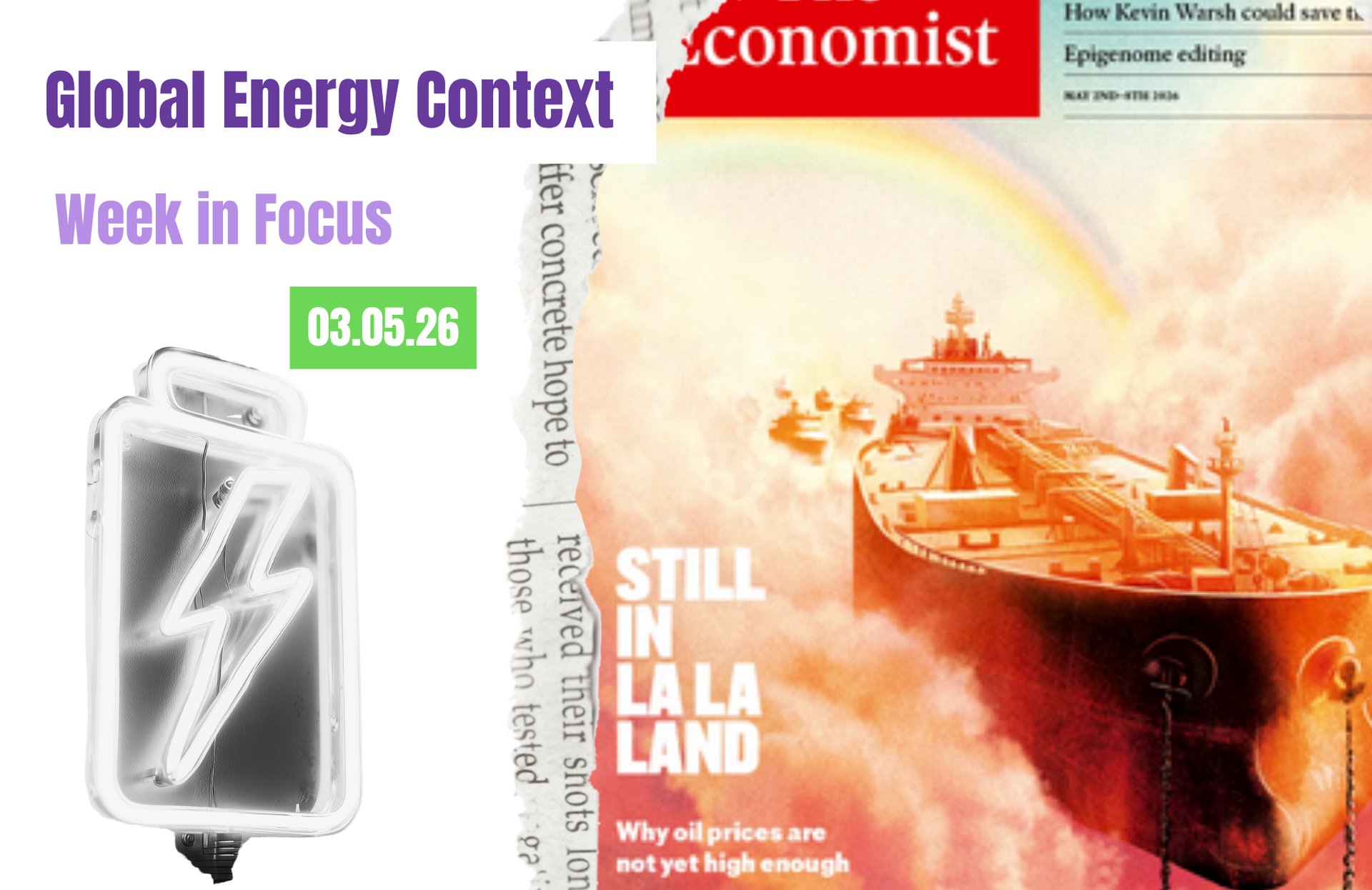
Oil markets erupted: Brent crude hit $126.41 per barrel, its highest since March 2022, before plunging more than $13 in a single session to settle at $114.25, exposing the extreme fragility of a market in which only seven vessels transited Hormuz in the prior 24 hours. Iran vowed “long and painful strikes” on U.S. positions if attacks resumed and reasserted control over the strait, while the U.S. pursued a “Maritime Freedom Construct” coalition to reopen it; the UN warned prolonged closure would push tens of millions into poverty. The Economist argued oil markets remain in “La La land,” with futures pricing an end-2026 decline to roughly $88 per barrel despite the biggest supply disruption in history. Repsol, reporting Q1 earnings, announced plans to increase jet fuel production by 15–20 per cent across its five Spanish refineries to offset war-related supply disruptions.
Iran threatens painful response if US resumes attacks, oil prices seesaw (Reuters)
Oil retreats after hitting four-year high on concern of US-Iran war escalation (Reuters)
Oil falls back after surging to $126 on supply fears (Financial Times)
Oil markets are still in La La land (The Economist)
Repsol plans to boost jet fuel output as Iran war disrupts global supply (Reuters)
Friday, May 1
ExxonMobil and Chevron both refused to alter pre-war production strategies despite White House pressure; Exxon reported Q1 net income of $4.2 billion, down 46 per cent year-on-year largely on $3.9 billion in paper hedge losses, while warning of a 6 per cent global production loss from Middle East exposure. Trump declared the strait “100% shut down” and “flawless,” described Iran’s leadership as “disjointed,” and said Iran had delivered a new proposal via Pakistan, while Brent eased to roughly $108 per barrel.
Exxon and Chevron defy Trump pressure to boost oil production (Financial Times)
Trump Says ‘Not Happy’ on Iran, Touts Strait ‘100% Shut’ (Bloomberg)
Sunday, May 3
The week closed with three developments that underscored the war’s broadening economic impact and the absence of any resolution. Trump weighed Iran’s latest proposal, a one-month deadline for a Hormuz deal followed by a second month of nuclear talks, but posted that Iran had “not yet paid a big enough price”; OPEC+ agreed a symbolic 188,000 barrel per day June quota increase that remains unimplementable behind the closed strait. The IMF warned that two-thirds of EU energy subsidies are untargeted, repeating the 2022 post-Ukraine fiscal mistakes, while Detroit’s Big Three automakers flagged roughly $5 billion in combined commodity inflation costs driven by aluminium, plastics, and naphtha price surges.
Trump Weighs Iranian Peace Offer Without Ruling Out More Strikes (Bloomberg)
IMF criticises EU governments for ignoring energy subsidy warnings (Financial Times)
Detroit carmakers warn of $5bn commodities shock due to Iran war (Financial Times)
Part 2: Key Energy Stories Beyond the Gulf
Africa
Tullow Shares Soar as West African Oil Brings Record Price
Bloomberg · Mon 28 Apr 2026
#OilWindfall Tullow’s April cargo sold at $130 per barrel, a record, with shares up 100% year-to-date; the company expects output at the higher end of 34,000–42,000 boepd. West African crude is commanding premium prices as buyers scramble for non-Gulf supply, benefiting smaller producers disproportionately.
Morocco Firm Plans First Fundraise for $25 Billion Gas Pipeline
Bloomberg · Tue 29 Apr 2026
#GasPipeline ONHYM plans its first fundraise to help finance the $25 billion, 6,900 km Nigeria-to-Morocco gas pipeline linking West African gas to the Mediterranean, with FID expected this year. The corridor positions itself as a European gas diversification option competing with Algeria’s trans-Saharan rival, gaining urgency as Gulf supply remains shut off.
South Africa now has a power surplus, says Eskom chief
Financial Times · Sat 2 May 2026
#GridReliability Eskom’s energy availability rose to roughly 65%, giving South Africa surplus capacity and over 300 consecutive days without load-shedding, with 2–3 GW of reserve planned for winter. Municipal debts exceeding R130 billion and ageing coal infrastructure remain systemic risks, but the turnaround marks one of the most dramatic reversals in African grid reliability.
https://www.ft.com/content/79aa1056-1303-4bf8-8968-b444509cd21b
Libya reaps oil bonanza from Iran war price surge
Financial Times · Sat 2 May 2026
#OilWindfall Libya’s production reached 1.4 million barrels per day in April, its highest since 2013, with revenue climbing to $2.9 billion from $1 billion in February. The windfall risks enriching armed factions rather than benefiting the population, highlighting how the Hormuz crisis is reshuffling petrodollar flows across North Africa.
https://www.ft.com/content/99bc2349-5991-4d9a-8453-9246c666a24d
AI & Energy Demand
Meta partners with space startup Overview Energy to secure solar power for data centers
Reuters · Sun 27 Apr 2026
#SpaceSolar Meta signed an agreement with Overview Energy for up to 1 GW of space-based solar power capacity for its data centres, with commercial delivery targeted for 2030. The deal reflects Big Tech’s intensifying search for novel power sources as AI-driven data centre expansion strains the existing U.S. grid.
Exclusive: Data center firm inks carbon removal deal as AI demand surges
Axios · Wed 30 Apr 2026
#CarbonRemoval NTT Data signed an agreement with Climeworks for carbon removal credits covering a few hundred thousand tonnes over a decade, the first such deal between a major AI infrastructure company and a direct air capture startup. Microsoft has paused new purchases, leaving the nascent DAC industry reliant on a thin pipeline of corporate buyers; NTT targets zero direct emissions by 2030.
https://www.axios.com/2026/04/30/data-center-deal-carbon-removal-ai
Batteries
World’s biggest battery maker CATL to raise $5bn
Financial Times · Mon 28 Apr 2026
#BatteryCapital CATL announced a $5 billion follow-on share placement in Hong Kong, capitalising on a 40% stock surge since the Iran war began. Proceeds will fund R&D and global expansion including plants in Hungary, Germany, and a Stellantis joint venture in Spain, reinforcing Chinese dominance of global battery supply chains.
https://www.ft.com/content/9a824616-7ea6-4cd8-93df-266173efb015
IEA — Battery recycling innovation surging
IEA · Tue 29 Apr 2026
#BatteryRecycling Battery circularity patents grew at a 42% annual rate from 2017 to 2023, compared with 16% for battery manufacturing; Asian applicants hold 63% of filings, with China’s share rising from 5% to 29%. With 1.2 million EV batteries reaching end-of-life by 2030 and 14 million by 2040, recycling innovation is emerging as a critical pillar of critical mineral supply security.
N.S. grid operator insists natural gas power plants cannot be replaced with batteries
CBC News · Tue 29 Apr 2026
#GridReliability Nova Scotia’s grid operator says 300–600 MW of gas-fired peakers are essential to fill a 1,700 MW grid gap by 2030; 1,000 MW of batteries would replace only 240 MW of peaker capacity. The analysis provides a concrete counterpoint to the narrative that batteries can replace gas at scale, with each 300 MW peaker costing roughly $800 million.
Gresham House Said to Plan €1 Billion Fund for Battery Storage
Bloomberg · Wed 30 Apr 2026
#BatteryStorage Gresham House is planning a battery storage fund of roughly €1 billion ($1.2 billion). The fund signals growing institutional appetite for grid-scale storage as energy security concerns and renewable intermittency drive demand for flexible capacity.
CleanTech, Renewables, Low-Carbon Fuel
War Hastens an Indonesian Biofuels Push That Has Global Stakes
Bloomberg · Mon 28 Apr 2026
#Biofuels Indonesia is fast-tracking its B50 biodiesel mandate to July, roughly a year ahead of schedule, requiring an additional 1.7 million tonnes of supply as methanol prices have doubled. The realistic trajectory is B42–B43 in 2026 with full B50 from January 2028; the acceleration reflects Southeast Asia’s framing of biofuels as an energy sovereignty tool in the face of soaring crude prices.
Investors pile into clean energy as Iran war drives push for energy security
Financial Times · Sun 3 May 2026
#CleanEnergy More than $3 billion flowed into clean energy ETFs in April, the largest monthly net inflows since January 2021, lifting total net assets to $43 billion; Nordex rose 67% year-to-date, Siemens Energy 50%, GE Vernova 65%. Analysts frame the war as an energy security trade rather than a climate play, with Société Générale calling it “not a renewables bounce” but a structural reassessment of supply risk.
https://www.ft.com/content/9921f2b5-c910-4cec-a50f-cad453935a1a
Energy Security
Global energy markets set for further test as El Niño looms
Reuters · Mon 28 Apr 2026
#ElNino A strong El Niño is forecast from mid-2026, threatening to layer additional energy demand on top of the Iran-driven supply crisis; Asia accounts for roughly 53% of global electricity demand. Asian LNG trades at roughly $868 per tonne versus coal at $104–$126, creating a price gap that could force coal-heavy economies to increase fossil fuel burn precisely as global climate commitments face their sternest test.
The great commodities disruption
Financial Times · Tue 29 Apr 2026
#SupplyShock The World Bank calculated a gross supply loss of 20 million barrels per day through Hormuz with a net shortfall of 4.6 million barrels per day after replacement sources, the largest single disruption since at least the 1973 Arab oil embargo. Oil prices jumped $46 per barrel in March alone; fertiliser prices are forecast to rise 31% and food prices 2% near-term, with 2027 potentially worse as carry-over stocks deplete.
https://www.ft.com/content/88cec47c-ea6d-47db-97f8-0431aae7427d
Chinese green technology poses national security problem for Europe, report warns
Financial Times · Tue 29 Apr 2026
#TechDependence China produces roughly 90% of solar modules, over 80% of wind turbines, and 80% of battery cells; a report co-authored by a former UK national security official warns of cyber, supply restriction, and U.S. pressure risks. Countries risk replacing fossil fuel import dependence with Chinese technology dependence, creating a new strategic vulnerability at the heart of the energy transition.
https://www.ft.com/content/c9cd5751-8d2d-4f24-b676-7c3ec349e404
China discovers 225 large, medium-sized crude oil, natural gas fields from 2021 to 2025
Global Times · Sat 3 May 2026
#ChinaEnergy China discovered 225 oil and gas fields between 2021 and 2025 with exploration investment of roughly 450 billion yuan ($65.8 billion); crude production hit a record 216 million tonnes in 2025 and gas output exceeded 260 bcm. Shale oil reached 8.5 million tonnes and offshore production surpassed 90 million tonnes of oil equivalent, reflecting Beijing’s intensifying drive for domestic energy security in a period of heightened geopolitical risk.
https://www.globaltimes.cn/page/202604/1360071.shtml
Climate & Emissions
Global Deforestation Slows, Analysis Finds. But Fires Remain a Major Threat.
New York Times · Tue 29 Apr 2026
#DeforestationGoodNews Global tree loss fell 14% in 2025 to roughly 63 million acres; primary tropical forest losses dropped 36% year-on-year, with Brazil deforestation down 41%. Wildfires consumed roughly 26 million acres, and overall deforestation remains 70% above the pace needed to meet the 2030 target, underscoring the gap between progress and commitments.
https://www.nytimes.com/2026/04/29/climate/wri-report-forest-loss.html
Unreported Coal Mine Methane Imperils Climate Action, Ember Says
Bloomberg · Tue 29 Apr 2026
#CoalMethane Only 23 of 73 coal-producing nations reported coal mine methane emissions, accounting for just 11% of an estimated 35 million tonnes; seven countries produce 94% of emissions, with China responsible for 76%. Roughly half of coal mine methane is abatable with existing technology, making reporting gaps a significant obstacle to near-term climate action.
Policy & Regulation
The EU’s methane regulation could spark an energy crisis
Financial Times · Sun 27 Apr 2026
#Regulation The U.S. Ambassador argues EU methane regulation risks reducing LNG supply and raising prices, with industry warning of price impacts “equivalent to the Middle East crisis” and penalties of up to 20% of global revenues. The regulation enters force as Europe faces its tightest gas market in years, creating a tension between climate ambition and supply security that could reshape transatlantic energy trade.
https://www.ft.com/content/bf1b0bb0-eea9-4336-bf5a-fad5117a33c6
Public Opinion & Reputation + Santa Marta Summit
Iran war to supercharge Asia’s move from fossil fuels to electrons
Reuters · Tue 29 Apr 2026
#Electrification The Iran war is accelerating electrification across Asia, with Vietnam EV sales up 150% in 2024 and 100% in 2025, Thailand up 150% in both years, and VinFast growing from 7,000 units in 2022 to 197,000 in 2025. Battery energy storage systems are forecast to grow ninefold by 2036 and two- and three-wheeler EV sales at a 30% compound annual rate, suggesting the crisis may prove a structural inflection point for Asian transport energy demand.
How LNG interests are seeking to disrupt global talks on decarbonising shipping
The Guardian · Thu 1 May 2026
#ShippingDecarbonisation LNG industry groups and allied flag states including the U.S., Saudi Arabia, Qatar, Liberia, and the Marshall Islands are lobbying to weaken IMO shipping decarbonisation rules; shipping accounts for roughly 3% of global greenhouse gas emissions. Roughly 40% of the global fleet transports fossil fuels and 337 new LNG carriers are on order, creating an industry whose commercial interests are structurally opposed to the regulations it is seeking to influence.
https://www.theguardian.com/environment/2026/may/01/lng-liquefied-natural-gas-imo-talks-shipping
France Unveils Fossil-Fuel Exit Plan at Colombia Climate Summit
Countries Draw Up Next Steps to Decarbonize at Colombia Fossil-Fuel Summit
Santa Marta: Key outcomes from first summit on ‘transitioning away’ from fossil fuels
Bloomberg; Carbon Brief · Tue 29 Apr – Wed 30 Apr 2026
#FossilPhaseOut The first-ever global summit dedicated to phasing out fossil fuel production brought 57 countries, roughly one-third of the global economy, to Santa Marta, Colombia, launching three workstreams on national exit roadmaps, financial system reform, and fossil-fuel-intensive trade; France announced its national fossil fuel exit plan. A new Science Panel recommended halting all new fossil fuel expansion and prohibiting fossil fuel advertising; China, the U.S., Russia, and India were not invited, and the next summit will be co-hosted by Tuvalu and Ireland in 2027.
UAE & OPEC
UAE exit strips OPEC of clout, risks bitter price war
Reuters · Mon 28 Apr 2026
#OPECExit The UAE was OPEC’s fourth-largest producer with capacity of roughly 4.85 million barrels per day and a target of 5 million by 2027; its exit leaves over 13 million barrels per day trapped in the Gulf. OPEC’s share of global production has declined from roughly 50% in the 1970s to about 30%, and the departure of the only member besides Saudi Arabia with meaningful spare capacity raises the prospect of a post-war price war.
Abu Dhabi state energy group to invest ‘tens of billions’ in US push;
Adnoc to Speed Growth With $55 Billion Project Awards Post-OPEC
Financial Times; Bloomberg · Mon 28 Apr – Sun 3 May 2026
#ADNOCInvestment ADNOC announced 200 billion dirhams ($55 billion) in project awards following the UAE’s OPEC exit, while its international arm XRG is evaluating 29 deals for a vertically integrated U.S. gas business worth “tens of billions.” XRG has abandoned hydrogen and carbon capture investments as commercially unviable, signalling a pivot toward fossil fuel production and trade; it holds a stake in Rio Grande LNG and completed a €14.7 billion acquisition of Covestro.
https://www.ft.com/content/e48d4c9b-36b8-476c-81a8-faccb1a981c0
The twilight of Opec;
‘The beginning of the end of Opec’: can the oil cartel survive the UAE’s exit?;
UAE opens up an Opec fissure
Financial Times · Tue 29 Apr 2026
#OPECExit The UAE’s departure reflects frustration at quota constraints and deepening estrangement from Saudi Arabia; the UAE was the fourth-largest controlled producer, accounting for 15% of OPEC’s controlled output, with capacity of roughly 4.85 million barrels per day against a quota that constrained production well below that level. OPEC retains roughly 75% of global proven reserves, but its share of actual production has fallen to about 25%; Iran’s control of Hormuz has “completely diluted” the cartel’s market power, and the UAE is expected to accelerate production immediately.
https://www.ft.com/content/a7b57a52-e50b-43cf-940a-2bd34e61979f;
https://www.ft.com/content/cf427766-a13e-4eb2-ab70-d9ee7ea5bed1;
https://www.ft.com/content/1e39d1ce-87d3-4bd6-9716-b45d78fc27ba
Gas & LNG
LNG tanker orders gain pace despite mixed outlook from Iran war
Reuters · Sun 27 Apr 2026
#LNGShipping LNG carrier orders reached 35 in Q1 2026, compared with 37 in all of 2025, with each vessel costing $250–260 million; 90–100 deliveries are expected in 2026, a record. 12.8 mtpa of Qatari capacity is sidelined for 3–5 years and Qatar is adding 70–80 newbuilds, while over 120 mtpa of new U.S. LNG capacity is due in 3–4 years.
The World Needs Natural Gas Now, but the U.S. Is Exporting All It Can
New York Times · Mon 28 Apr 2026
#USLNG U.S. LNG terminals are operating at full capacity at roughly 18 bcf/d, with five new terminals planned by end-2027 and exports projected to rise 18% in 2026 and 10% in 2027. Ras Laffan damage delays global LNG supply growth by more than two years according to the IEA; Europe’s gas use fell 4% year-on-year in March, suggesting demand destruction is beginning.
https://www.nytimes.com/2026/04/28/business/energy-environment/iran-hormuz-lng-united-states.html
China’s April LNG Imports Set to Hit Eight-Year Low, Kpler Says
Bloomberg · Tue 29 Apr 2026
#ChinaLNG China’s April LNG imports are set to reach roughly 3.5 million tonnes, the lowest since April 2018, down 30% year-on-year as spot prices rose 70% above pre-war levels. Re-exports fell to zero in April after hitting an all-time high of over 700,000 tonnes in March, indicating China has exhausted its arbitrage surplus and is now rationing supply.
U.S. has a natural gas glut even amid an energy crisis
US Has More Natural Gas Than It Can Use as War Chokes Global Supply
Axios; Bloomberg · Tue 29 Apr – Wed 30 Apr 2026
#GasGlut Permian Basin gas prices plunged to an all-time low of −$9.60 per million BTU on 24 April, while Henry Hub traded at $2.64, down 20% year-on-year; European and Asian benchmarks are running at roughly six times U.S. levels. The structural mismatch reflects pipeline bottlenecks that have pushed Permian flaring up 13% in Q1, with five new pipelines totalling 11 bcf/d due online by end-2028; Goldman Sachs estimates every 10% rise in LNG prices adds 8 basis points to global inflation.
https://www.axios.com/2026/04/30/natural-gas-texas-negative
Shipbuilding feels pinch from war-driven paint and lubricant shortage
Financial Times · Wed 30 Apr 2026
#SupplyChain Japanese shipbuilders including Imabari are warning of supply chain disruptions for petroleum-derived materials; Nippon Paint has raised paint thinner prices 75% for Japan’s building sector. Shipyard order backlogs are at their highest in nearly two decades, but new dry-bulk contracts collapsed from 45 in January to zero in April, signalling that the war is simultaneously boosting demand for shipping and starving yards of the materials to build it.
https://www.ft.com/content/f6dbcc9c-dd1d-4af9-9a2e-2cbf6b044cd5
LNG Canada exports hit 1 million metric tons for first time in single month
Reuters · Thu 1 May 2026
#LNGCanada LNG Canada exported over 1 million tonnes in April, a monthly record, with 79 cargoes shipped since operations began in June 2025; nameplate capacity is 14 mtpa. All volumes are going to Asia, with over 50% to South Korea and one cargo to China, confirming Canada’s rapid emergence as a Pacific Rim gas supplier.
Bosnia signs up to Trump-linked pipeline to reduce Russian gas dependence
DOE signs agreements to grow American LNG exports
Al Jazeera; LNG Industry · Thu 1 May – Sat 3 May 2026
#GasPipeline Bosnia signed on to the roughly $1.5 billion Southern Interconnection pipeline linking it to Croatia’s Krk LNG terminal, replacing 100% Russian gas dependency. The agreement was announced at the Three Seas Initiative summit, where the U.S. DOE launched the “Trump Peace Pipelines Framework” supporting Central and Eastern European energy infrastructure; the EU warned on transparency concerns around AAFS, the Trump-linked entity leading the initiative.
Oil
US oil stocks plummet, country becomes net crude exporter on weekly basis for first time, EIA says
Reuters · Tue 29 Apr 2026
#USExports The U.S. became a net crude exporter on a weekly basis for the first time since the Second World War, with crude exports hitting a record 6.44 million barrels per day and total exports reaching 14.18 million barrels per day. Crude inventories fell 6.2 million barrels to 459.5 million, gasoline stocks dropped for an 11th consecutive week, and distillate stocks declined 4.5 million barrels, signalling that record exports are drawing down domestic buffers.
The crisis in oil markets will get bigger before it goes away
The Economist · Wed 30 Apr 2026
#OilCrisis The Economist calculates a net shortfall of 12.3 million barrels per day over March and April, roughly 10% of global consumption, with commercial inventories being drained at up to 8 million barrels per day. Asian refiners have slashed throughput by 3.5 million barrels per day, crude stocks fell 13% to 545 million barrels, and diesel and jet fuel shortages are expected within 4–8 weeks across most regions; governments from Sri Lanka to Cambodia are already rationing fuel.
Iraq says oil output, exports can recover within a week once Hormuz crisis ends
Reuters · Sat 2 May 2026
#IraqOil Iraq says it can restore full output and exports within seven days of Hormuz reopening; current production stands at 1.5 million barrels per day with roughly 200,000 bpd exported via the Ceyhan pipeline. The claim signals confidence in infrastructure readiness but contrasts with The Economist’s assessment that refinery restarts and demining could take months, even after a deal is reached.
OPEC+ agrees third oil output quota hike since Hormuz closure
Reuters · Sun 3 May 2026
#OPEC OPEC+ agreed a symbolic 188,000 barrel per day June increase, effectively May’s quota minus the departing UAE’s share; Saudi Arabia’s formal quota of 10.291 million barrels per day dwarfs its actual March production of 7.76 million. March output of 35.06 million barrels per day, down 7.70 million from February, underscores the cartel’s inability to influence a market where its largest producers cannot physically ship their oil.
Majors
Shell buys Canadian shale producer ARC for $16bn
Oil majors eye resurgent Canadian energy in wake of Middle East upheaval
Financial Times; Reuters · Sun 27 Apr – Tue 29 Apr 2026
#CanadaEnergy Shell acquired ARC Resources for $16.4 billion ($13.6 billion plus $2.8 billion debt), adding 370,000 boepd and 2 billion barrels of reserves, its largest deal since BG Group; ARC shares rose 22%. TotalEnergies, ConocoPhillips, Equinor, and BP are all reportedly evaluating Canadian targets in a reversal of a decade-long foreign divestment trend; domestic ownership of Canada’s oil sands rose from 69% to 89% between 2016 and 2025, and the Montney basin alone produces roughly 10 bcf/d, about half of Canada’s gas output.
https://www.ft.com/content/2df72d57-8677-433c-b62a-3a2524a8a884
BP Profit Jumps as Oil Trading Boomed During Iran War
Bloomberg · Mon 28 Apr 2026
#BPEarnings BP’s Q1 adjusted net income more than doubled to $3.2 billion, beating the $2.6 billion consensus, driven by “exceptional” oil trading performance; net debt rose 14% to $25.3 billion. The company is restructuring into an upstream-downstream model, rerouting fuels to Australia to offset lost Gulf supply; its 411,000 bpd of Middle Eastern production remains at risk and the cost-cutting target has been raised to $7.5 billion by end-2027.
TotalEnergies Raises Buyback, Dividend as War Lifts Profit
Bloomberg · Tue 29 Apr 2026
#TotalEnergies Q1 adjusted net income reached $5.39 billion, up 29% and beating the $4.98 billion consensus; TotalEnergies doubled its Q2 buyback to $1.5 billion and raised its dividend to €0.90. Roughly 15% of output is shut in across Qatar, Iraq, and the UAE; shares are up 41% year-to-date, and management warned that global inventories will reach “very low” levels even if the conflict ends in May.
SOURCES
Reuters, Bloomberg, Financial Times, The Economist, New York Times, Axios, Al Jazeera, The Guardian, CBC News, IEA, LNG Industry, Global Times, Carbon Brief
Statem helps energy and adjacent businesses build outstanding brands that differentiate with credibility and organically earn trust of their stakeholders, investors, and customers.
Our clients choose us for our deep sector knowledge and experience helping energy topics get heard and understood by every imaginable audience.
Want to receive these directly?
Building Smarter Energy Communications
© 2026. All rights reserved.
Send us a message, or
Book a free discovery call, or send us an email.
contact@statem.net